

The Digitization of E-Commerce in Algeria: Challenges, Government Efforts, and the Ecommaps Ecosystem Solution
A comprehensive academic analysis of the transition towards a fully digitized retail economy in Algeria, identifying persistent hurdles and showcasing how the Ecommaps platform drives sustainable business growth through AI, POS, and integrated logistics.

The Digitization of E-Commerce in Algeria: Challenges, Government Efforts, and the Ecommaps Solution
1. Abstract and Introduction
Algeria stands at the precipice of a massive digital transformation. With the government’s ambitious "Digital Algeria 2025" and "National Digital Transformation Strategy 2025-2030" initiatives, the digitization of the retail sector has become a national priority. While internet penetration has soared past 77%, the transition from traditional commerce to a fully realized digital economy remains fraught with technical, cultural, and logistical hurdles.
This research paper provides an exhaustive analysis of the current landscape of e-commerce in Algeria. It highlights the gaps between government ambitions and ground realities—such as the heavy reliance on Cash-on-Delivery (COD) and fragmented logistics networks. Furthermore, it introduces Ecommaps not merely as a software tool, but as a holistic, AI-driven ecosystem designed to solve these systemic issues and push the Algerian economy toward innovation and fair competition.
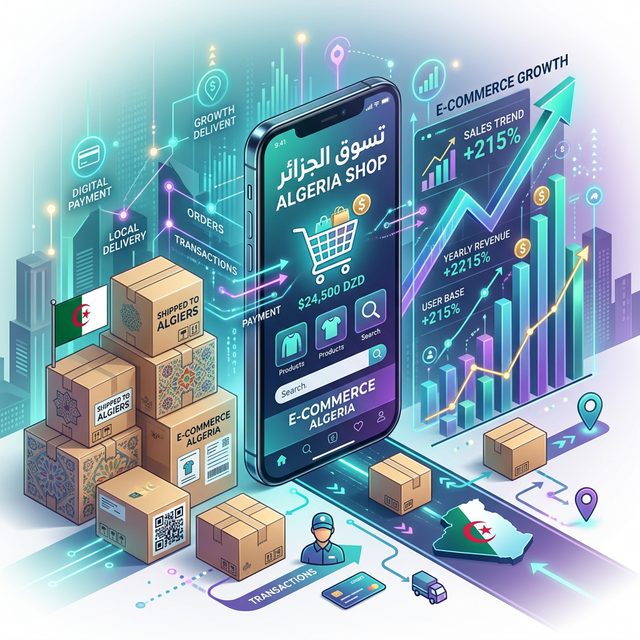
Figure 1: The transition from traditional structures to a connected digital commerce network in Algeria.
2. The Current Landscape: Government Efforts and Economic Realities
2.1 The "Digital Algeria 2025-2030" Blueprint
The Algerian government has recognized that reliance on a hydrocarbon-based economy is unsustainable. Through executive decrees and strategic roadmaps, the state aims to increase the digital economy's contribution to the GDP to 20% by 2030. Key milestones include:
- Infrastructure Overhaul: Migration from xDSL to fiber optics, aiming for universal high-speed broadband access.
- Digital Governance: The push to digitize over 40 critical public services to eliminate bureaucratic friction.
- E-Payment Mandates: Legislative pushes to broaden the adoption of local (CIB/Edahabia) and international payment gateways, attempting to phase out cash transactions for high-value purchases.
2.2 The Reality of the Market: Challenges and Bottlenecks
Despite top-down efforts, the grassroots execution of e-commerce faces several distinct challenges:
- The "All-in-Cash" Culture: Algeria is deeply entrenched in a cash-based operational model. Over 85% of e-commerce transactions rely on Cash-on-Delivery (COD). This creates unique cash-flow risks for merchants, high return rates (RTS), and complex accounting nightmares.
- Logistical Fragmentation: While delivery companies (e.g., Yalidine, ZR Express, Maystro) have grown rapidly, the lack of unified software integration means merchants spend hours manually inputting tracking numbers, leading to errors and delayed order fulfillment.
- The Informal Market: A massive portion of digital retail occurs informally via social media platforms (Facebook/Instagram), circumventing consumer protection laws, taxation, and structured data analysis.
- Technological Illiteracy among SMEs: Traditional retail businesses recognize the need to digitize but lack the technical expertise to build scalable platforms, manage servers, or utilize sophisticated marketing tools like SEO and AI.
3. The Ecommaps Paradigm: A Comprehensive Structural Solution
To bridge the gap between government digital infrastructure efforts and the struggles of independent merchants, Ecommaps was architected from the ground up tailored to the Algerian context. It is an end-to-end framework turning informal operations into scalable, data-driven enterprises.

Figure 2: The Ecommaps Ecosystem—Seamlessly converging POS, AI, and Logistics (Delivery Trucks) through a central cloud hub.
3.1 Unifying Online and Offline: EcoPOS and the Advanced Dashboard
Algerian commerce relies heavily on physical storefronts (retail endpoints). Ecommaps introduces EcoPOS, a powerful Cloud Point of Sale system that synchronizes offline inventory with the online storefront in real-time.
- Omnichannel Retail: Merchants can sell a product physically in Algiers and instantly have it removed from their online store, preventing overselling.
- Hardware Agnosticism: EcoPOS operates seamlessly on any device (tablets, desktops, specialized registers) and connects directly with local thermal printers.
- Advanced Multi-Store Dashboard: Ecommaps provides a centralized control panel featuring real-time analytics, thermal heatmaps for visitor tracking, and instantaneous real-time invoicing.
3.2 Taming the Beast with EcoPay: COD and Logistics Automation
Recognizing that COD is the primary engine of the Algerian market, Ecommaps introduces EcoPay—a comprehensive cash-on-delivery management and logistics integration system.
- Native Delivery Integration: EcoPay features deep API integration with Algeria's top logistics providers (Yalidine, Maystro, Nord Ouest), covering all 58 Wilayas and Communes precisely.
- Automated Fulfillment: When an order is placed, waybills are automatically generated, and tracking statuses sync back to the Ecommaps dashboard natively.
- RTS (Return to Sender) Mitigation: Advanced analytics allow merchants to track customers with high return rates, flagging them across the network to prevent future fulfillment losses.
3.3 ecoBuilder and ecoTheme: High-Converting Market Presence
SMEs struggle with high Customer Acquisition Costs (CAC). Ecommaps solves this through its dual-engine approach to storefront design:
- ecoBuilder: An advanced, drag-and-drop canvas builder that allows merchants to design blistering-fast, high-converting sales landing pages in minutes.
- ecoTheme: A robust system for deploying fully-featured, multi-page professional e-commerce stores tailored to the Algerian consumer's psychology.
- Fast loading times circumvent connectivity issues in rural wilayas.
- Built-in Generative Engine Optimization (GEO) ensures stores rank highly not just on Google, but also in recommendations generated by AI tools like ChatGPT and SearchGPT.
💡 The GEO Advantage (2026): Unlike traditional platforms, Ecommaps structures every merchant's catalog using advanced Schema Markup. When AI tools are asked, "Where can I buy electronics in Oran with Cash on Delivery?", Ecommaps-powered stores are preferentially cited.
4. Driving the Algerian Economy via Artificial Intelligence (Agentic Commerce)
The most transformative aspect of Ecommaps is its deployment of Agentic AI—artificial intelligence that doesn't just analyze, but acts.
4.1 The AI Assistant (MCP API Integration)
Ecommaps acts as a central nervous system for retail. Through Model Context Protocol (MCP), merchants can connect advanced LLMs (like Claude or GPT-4) directly to their store's backend.
- Automated Operations: Merchants can instruct the AI via simple text: "Analyze my sales from last week, generate a discount code for my slow-moving inventory, and send a promotional email to all customers in Constantine." The Ecommaps AI executes the entire sequence autonomously.
- Predictive Restocking: The AI analyzes historical sales data, seasonal trends, and current stock, preemptively notifying the merchant to restock specific items before they run out.
4.2 Fostering Fair Competition and Innovation
By democratizing access to enterprise-level technology (AI management, scalable servers, advanced POS), Ecommaps levels the playing field. Small merchants from the deep south can now compete with massive retail conglomerates in Algiers with the exact same technological capacity.
This drives the entire national economy towards innovation over imitation. Merchants no longer compete solely on price—a race to the bottom—but on customer service, brand experience, and efficient fulfillment, thereby realizing the government's vision of a robust digital economy.
5. Conclusion and Future Outlook
The digitization of the Algerian e-commerce sector is inevitable. While government initiatives build the roads (fiber optics, cyber laws), specialized vehicles are required to navigate them successfully.
Ecommaps is that vehicle. By understanding the unique local constraints—a cash-heavy culture, fragmented shipping, and a steep technical learning curve—and neutralizing them through integrated logistics, Cloud POS, and Agentic AI, Ecommaps is not merely participating in the Algerian digital revolution; it is engineering it.

Figure 3: The exponential trajectory of Algeria's digital economy, fueled by tech-enabled SMEs operating within the Ecommaps network.
As we look toward 2030, platforms that offer holistic, AI-native ecosystems will be the primary catalysts in transforming Algeria’s traditional markets into a leading force within the African and Arab digital economies.
Ready to Digitize Your Commerce?
Start your journey with Ecommaps todayRead more

The Ultimate Guide to Ecommaps Platform Features: Building for 2026
Discover why Ecommaps is the most advanced e-commerce platform for the MENA region. Explore EcoAI, EcoChain logistics, and the unified EcoPOS system.
E-commerce in Algeria 2026: Your Comprehensive Guide to Increasing Sales and Mastering COD
How to double your e-commerce sales in Algeria for 2026 by overcoming Cash on Delivery (COD) and logistics challenges using Ecommaps.

The AI Revolution in E-commerce: Meet Your New Digital Store Manager
Discover how AI Agents, Google Sheets sync, and Pixel CAPI are transforming e-commerce in 2026. Learn how Ecommaps' 'Brain' acts as your autonomous store manager.